Best Online Hypnotherapy for Adults: Compared

Last Updated: November 19, 2026
Quick Summary
Online hypnotherapy is talking therapy delivered by video call, where a qualified practitioner guides you into focused relaxation to explore and change a worry, habit or reaction. Before booking, check the practitioner's professional body membership, training, and insurance, since hypnotherapy is not statutorily regulated in the UK.
Hypnotherapy is not a statutorily regulated profession in the UK, so anyone can call themselves a hypnotherapist.
Ask which professional hypnotherapy body the practitioner is registered with, and what their training involved.
Confirm whether the practitioner holds professional indemnity insurance and receives regular supervision.
Live one-to-one sessions suit defined issues such as phobias or persistent anxiety; recordings suit general relaxation.
Book a short introductory conversation before committing, and compare the total cost of a realistic course.
Table of Contents
What Online Hypnotherapy Is and How It Works
Online hypnotherapy is a form of talking therapy delivered by video call, in which a qualified practitioner guides you into a state of focused attention and relaxation. (Source: Complementary and Natural Healthcare Council)
Hypnosis is a natural state of focused attention. Most people slip in and out of it daily, for example when absorbed in a film or a long drive. In a session, the practitioner uses that focus to explore how a worry, habit or reaction is held, and to introduce new ways of responding.
A typical session begins with a conversation about what you want to change. The practitioner then guides you into relaxation, offers suggestions aligned with your goals, and brings you back to full awareness.
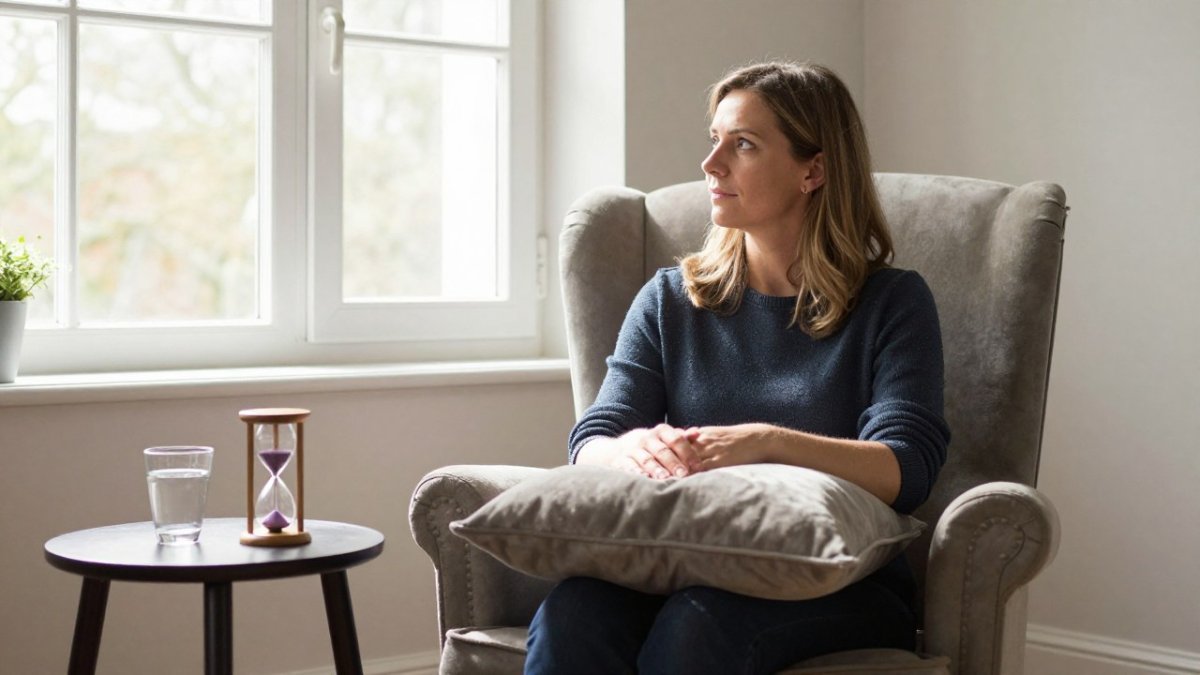
The main difference is the setting: you choose the room, the chair and the lighting, which many clients find helps them settle more quickly.
Live Online Practitioners Versus Recorded Hypnosis Apps
Recorded hypnosis audio and live sessions serve different needs, and the choice matters more than most guides admit. A recording plays the same script to everyone. A live practitioner adjusts to your responses in real time.
Their limitation is that they cannot ask follow-up questions, notice when a suggestion lands poorly, or change direction when something unexpected surfaces.
Live sessions with a one-to-one practitioner typically begin with a conversation, then move to tailored work. You can raise concerns mid-session, and the approach can shift if it is not helping. The trade-off is cost and scheduling. Live sessions usually cost more per session than an app subscription, so the decision often comes down to how specific your problem is.
A practical rule: if you want general relaxation, a good recording may be enough. If you have a defined issue such as a phobia, habit or persistent anxiety, a live practitioner is usually the better investment.
Finding an Online Clinical Hypnotherapist You Can Trust
Hypnotherapy is not a statutorily regulated profession in the UK, which means anyone can call themselves a hypnotherapist. That makes your own due diligence the single most important step before booking. The good news is that a clear set of checks separates accredited practitioners from the rest.

Check for membership of a recognised professional body
Accredited practitioners often belong to a professional hypnotherapy body. Ask any practitioner which body they are registered with. Membership is not a guarantee of quality on its own, but these bodies set training standards, require continuing professional development and operate complaints procedures.
Understand what the qualification actually is
Ask what training the practitioner completed, how long the course was, and whether it included supervised practice. A clinical hypnotherapy qualification from a recognised training school is a reasonable baseline.
Ask about insurance and supervision
A credible practitioner should be able to confirm whether they hold professional indemnity insurance and who provides it. Many also receive regular supervision or peer consultation, in which they discuss their caseload with a more experienced clinician. Supervision is a mark of professional seriousness, not a sign of inexperience.
Match the practitioner to your concern
A practitioner who works regularly with anxiety, sleep, phobias or grief will usually explain their approach more clearly than one who claims to treat everything. Ask how they would work with your specific issue and what a realistic outcome looks like.
Read the signals in the first conversation
A good practitioner explains what a session involves, what hypnotherapy can and cannot do, and what they would expect from you between sessions. They will not diagnose a medical condition, and they will refer you to your GP where appropriate. Be wary of anyone who guarantees a cure, claims hypnotherapy works in every case, or discourages you from seeking medical advice.
Safety and red flags
Hypnotherapy is generally considered safe for most adults, but it is not a substitute for medical or psychiatric assessment. If you have a history of psychosis, severe dissociation or certain neurological conditions, speak to your GP before starting. Online work also raises practical safeguarding questions: confirm the video platform is secure, ask how session notes are stored, and check the practitioner's privacy policy.
Our advice is to book a short introductory conversation before committing. It gives you a feel for the practitioner's style and lets you check whether you trust them. The free 20-minute consultation offered by Sonia Reed Hypnotherapy is designed for exactly this purpose, and you can see what the services cover before deciding.
Watch out: a practitioner who is evasive about their training, insurance or professional body is a reason to pause, however confident they sound.
Online Hypnotherapy for Anxiety, Stress and Sleep
Anxiety, stress and poor sleep are among the most common reasons adults seek hypnotherapy. They often feed into each other: a racing mind at night makes the next day harder, and the stress of the day makes sleep harder still.
For anxiety, hypnotherapy is often used to help people notice the pattern that triggers a worry and to build calmer responses. Some people describe feeling less reactive over time, though results depend on the person and the problem. The work is usually paired with practical steps between sessions.
Stress work tends to focus on recovery: learning to switch off from a demanding day and to let the body settle. Many people find that a regular relaxation routine, combined with a few hypnotic suggestions, makes the day feel more manageable.
Sleep difficulties respond well to a structured approach. Sessions may address the thoughts that keep you awake and build a wind-down routine you can repeat. For a deeper, practical guide, read Can Hypnotherapy Help You Sleep Better? General guidance on sleep and anxiety is available from the NHS, and is worth reading alongside any therapy you choose. (Source: National Institute for Health and Care Excellence)
Hypnotherapy is not a substitute for medical assessment. If anxiety or insomnia is severe or persistent, speak to your GP as well.
How Much Online Hypnotherapy Typically Costs in the UK
Cost is one of the first things adults check before booking, and the honest answer is that online hypnotherapy pricing varies widely. Rather than quote a single figure, it helps to understand the structure behind the numbers so you can judge whether a quote is reasonable.
The three pricing models you will encounter
Pay-per-session. The most common model for live one-to-one work. You book and pay for each session individually, usually with no commitment beyond the next appointment. This suits people who want to test the fit before committing.
Fixed packages. Practitioners often sell blocks of four, six or eight sessions at a reduced per-session rate. Packages lower the unit cost but lock in payment upfront, so check the refund and rescheduling terms before you buy.
Subscription apps and recorded audio. Monthly subscriptions for guided hypnosis audio sit at the low end of the market. They are inexpensive per month but deliver a generic script rather than tailored work, so they are not a like-for-like comparison with a live practitioner.
What drives the price up or down
Session length is the biggest variable: a 60-minute session costs more than a 30-minute one, and some practitioners offer shorter follow-ups once the initial assessment is done. Practitioner experience and specialism also matter, a clinician who regularly works with a specific concern such as health anxiety or phobias may charge more than a generalist. Location still influences price even for online work, because practitioners tend to benchmark against their local market.
Questions to ask before you pay
Ask whether the initial consultation is free or chargeable, whether sessions are paid in advance, and what happens if you need to cancel. Ask how many sessions a typical course involves for your concern, a practitioner who can give a realistic range, rather than a fixed promise, is usually the more trustworthy one. If a package is offered, ask whether unused sessions are refundable.
Payment and insurance
Most online hypnotherapy is paid privately, and many practitioners accept card or bank transfer at the time of booking. Some private health insurance policies include hypnotherapy when it is delivered by an accredited practitioner, but cover varies considerably between insurers and policies, so check directly with your provider before assuming a session will be reimbursed. If you have a health cash plan or an employer-funded wellbeing benefit, ask whether talking therapies are included.
For current prices and package options from Sonia Reed Hypnotherapy, see the detailed pricing guide, which sets out the figures in full.
Watch out: be cautious of any practitioner who asks for a large upfront payment before you have spoken to them, or who pressures you to buy a long package during the first call. A short introductory conversation should come first.
A sensible approach is to compare the total cost of a realistic course of sessions, not the price of a single appointment. A cheaper first session that leads to twice as many appointments is rarely the better value.
The three pricing models the article describes, and what each one means for your budget, are summarised below.
Pricing model | What it means | Watch out for |
Pay-per-session | Book and pay for each live session | No commitment beyond the next appointment |
Fixed packages | Blocks of four, six or eight sessions at a reduced rate | Check refund and rescheduling terms before buying |
Subscription apps and audio | Monthly fee for guided recordings | Generic script, not tailored work |
Adult-Specific Concerns: Phobias, Menopause, Grief and Habits
Adults bring many concerns to hypnotherapy, and each calls for a different emphasis.
Phobias often respond to focused, step-by-step work. The practitioner helps you approach the fear in a controlled way while you are relaxed, which can reduce the intensity of the reaction over time.
Menopause can bring anxiety, disrupted sleep and mood changes. Many midlife women seek support for these symptoms alongside medical advice from their GP.
Grief and major life changes, such as divorce or separation, call for a slower and more reflective approach. A safe, non-judgmental space to talk matters as much as any technique.
Unwanted habits, including emotional eating and smoking, benefit from clear goals and consistent practice. A common mistake is expecting one session to remove a long-established habit. Expect a course of work and regular effort between sessions.
Booking Your Free 20-Minute Consultation and Setting Up Your Space
Booking is straightforward. Choose a time, confirm the video platform, and agree on a session date. The free 20-minute consultation is the easiest way to decide whether the practitioner suits you. Booking your consultation takes only a few minutes, and you can also read more about how to book a session.
Your setup matters more than many people expect. Choose a quiet room where you will not be interrupted, sit somewhere comfortable, and use headphones if you can. Close the door, silence your phone and make sure your internet connection is stable.
Before your first session, write down what you want to change and why now. This gives the practitioner a clear starting point. Keep the notes private; you do not need to share them unless you want to.
Our recommendation is to keep the same time slot each week where possible. Consistency is one of the strongest predictors of progress, and it helps the habit of relaxation take hold.
Frequently Asked Questions
Is online hypnotherapy effective for adults?
Research on hypnotherapy is still developing, and results vary between people. Many adults find it helpful for stress, sleep and habit concerns, particularly when sessions are tailored to their goals. Online sessions by video can work well if you have a private, quiet space and a stable connection. A consultation with a qualified practitioner can help you judge whether it suits your situation, and it is not a replacement for medical advice if you have a diagnosed condition.
What professional qualifications should an online hypnotherapist hold?
Look for a practitioner who holds a recognised hypnotherapy qualification and is a member of a professional body with a code of ethics and complaints procedure. Ask about their training hours, supervision and whether they carry professional indemnity insurance. Clear answers to these questions are a good sign. Sonia Reed Hypnotherapy offers a free 20-minute consultation before you commit to anything.
Can an online clinical hypnotherapist help with anxiety and sleep?
Many adults seek online support for anxiety and sleep difficulties, and a clinical hypnotherapist may combine relaxation techniques with structured conversation to address patterns of worry. Outcomes differ from person to person, so no practitioner can promise a specific result. If your anxiety or sleep problems are severe or long-standing, speak to your GP as well, as hypnotherapy works best alongside appropriate medical care rather than instead of it.
How much does online hypnotherapy cost?
Pricing depends on the length of sessions, how many you need and the practitioner's experience. Recorded apps usually cost far less than live sessions, but they do not offer individual tailoring. Sonia Reed Hypnotherapy's current session prices are not listed here, so check the website or ask for a quote. The free 20-minute consultation gives you a chance to discuss budget and what a realistic number of sessions might look like for you.


Comments